Your Nervous System Isn’t Broken: Understanding Anxiety Through a Regulated Lens
Anxiety has a way of making everything feel urgent.
Like something needs to be solved right now.
A thought turns into a spiral.
A sensation turns into a story, suddenly, you’re not just having a moment of stress you’re in it. But what if anxiety isn’t a sign that something is wrong with you? What if it’s actually your body trying to protect you?
This is where understanding your nervous system changes everything.
Not because it magically removes anxiety but because it helps you stop interpreting it as danger, and start responding to it with care.And that shift alone is often where relief begins.
What Is the Nervous System?
In a way that actually makes sense, please…
Your nervous system is your body’s internal communication network. It’s constantly asking one question:
“Am I safe right now?”
When it thinks the answer is no, it shifts into protection mode: fight, flight, freeze, or fawn.
When it senses safety, it shifts into: rest, digest, repair, and connection.
Anxiety shows up most often when your system is stuck in that “not safe yet” loop, even if nothing in your present moment is actually dangerous. And this is important because anxiety is not just a mindset issue, It’s a state of the body. Which means it can be influenced through the body too. That’s where regulation becomes powerful.
We work on this and so much more during private lessons, and on our yoga and wellness retreats.
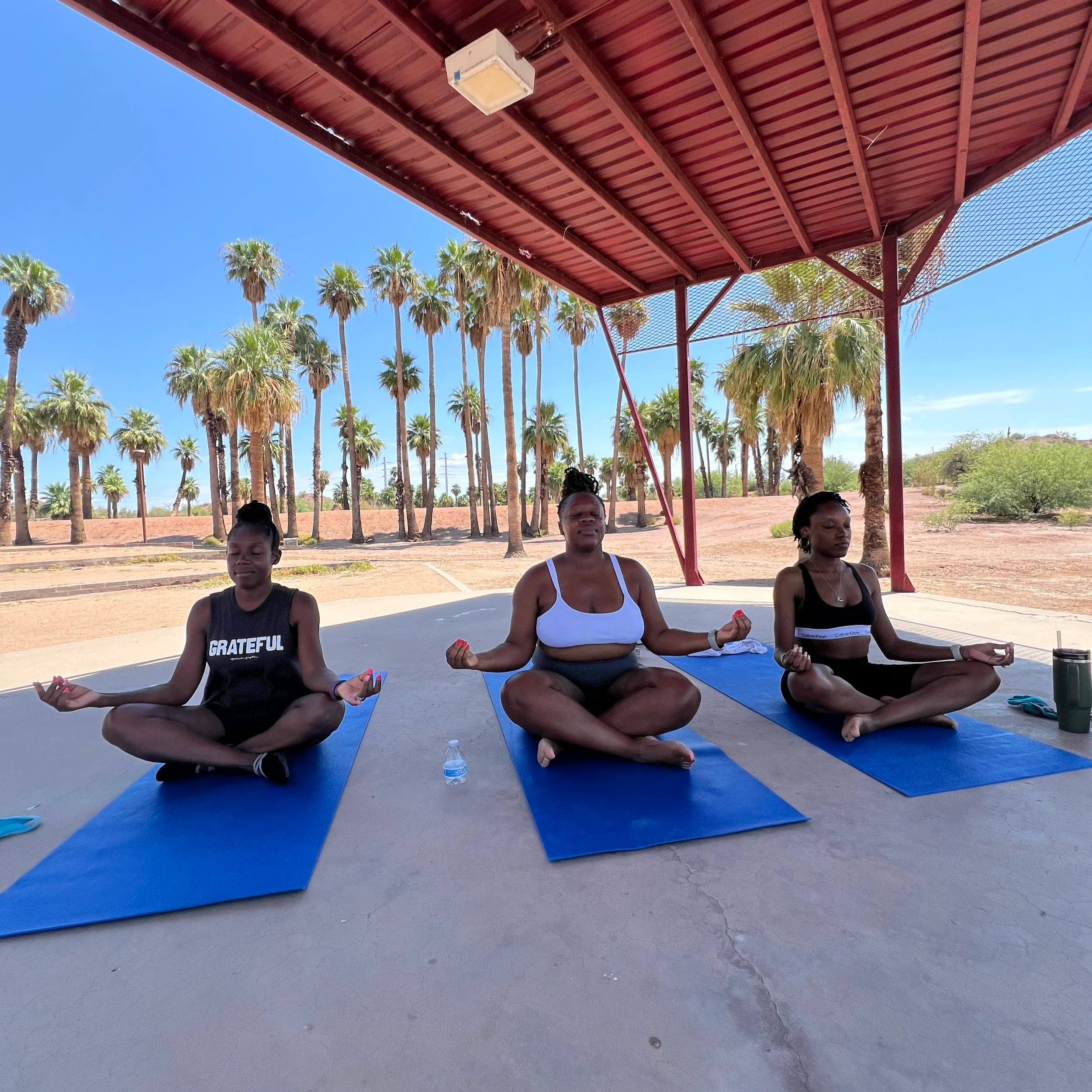
Sensory Awareness Yoga Practice
& what’s anxiety?
From a nervous system lens, anxiety is often a state of activation without completion or resolution. Your body prepares for something, real or imagined, and doesn’t get the chance to fully discharge that energy.
That’s why anxiety can feel like: racing thoughts, tight chest or shallow breath, restlessness in your skin, overthinking everything, feeling “on edge” for no clear reason
Your mind then tries to make sense of it.
But often, the mind is just following the body’s signal.
How Does This Connect?
When your nervous system is disregulated, your mind will look for reasons. When your nervous system is regulated, your mind naturally slows down This is one of the biggest ways nervous system work supports anxiety. It doesn’t just calm thoughts it changes the internal state that produces them. Kinda crazy huh?

& how this helps anxiety.
This is where things start to shift. When you practice regulation, you’re sending messages directly to your body. Overtime this messages start to matter. Being consistent with things you say, and leaning into trusting those words more and more.
What starts to shift? The intensity of anxious spikes decreases. Thoughts feel less urgent and consuming. Your body recovers faster after stress. You begin to notice anxiety earlier (before it builds). It’s not about never feeling anxious again. It’s about your system not getting stuck there.
Ways To Practice Regulation.
More like signals of safety.
And repetition is what rewires the system.
1. Longer exhales
A longer exhale tells your body: we are not in immediate danger.
Even 5 slow breaths can interrupt the anxiety loop by downshifting your physiological arousal.
2. Grounding through the senses
When anxiety pulls you into the future, your senses bring you back into now.
This interrupts the mental spiral and helps the body reorient to safety in the present moment.
3. Gentle movement
Anxiety is energy. Movement helps complete it.
Even subtle motion can help the nervous system discharge what it’s been holding.
This is why yoga, walking, or shaking the body can create real relief—not because it distracts you, but because it moves the state through.
How Yoga Supports Both.
Yoga helps you to notice what’s happening inside you without judgment. Staying with sensation without panic. Pairing breath with movement to steady the system. Learning that intensity can rise and fall without overwhelm.
For anxiety specifically, yoga helps brings you out of your head and into your body, slows the pace of internal processing, teaches your system that stillness is safe again, creates a consistent signal of “I am okay right now”
Over time, this changes your baseline, not by forcing calm, but by expanding your capacity to meet discomfort without escalating into panic.
Interested in learning more about yoga, and yoga sessions? Let’s get the conversation going.