Restorative Yoga: What It Is, Who It's For, and Why Slowing Down Matters
Let's talk about rest for a second.
Not the kind where you're scrolling on your phone, thinking about the 17 things you still need to do tomorrow. Not the kind where you're technically sitting down but your brain is running through your entire to-do list.
I mean actual rest.
The kind where you give yourself permission to stop doing, stop fixing, and stop trying to be productive for a little while. If you've ever felt like you should be doing more, moving more, or somehow optimizing your wellness routine, I have a little reminder for you: sometimes, the most supportive thing you can do for yourself is slow down.
And that's where restorative yoga comes in.
What Is Restorative Yoga?
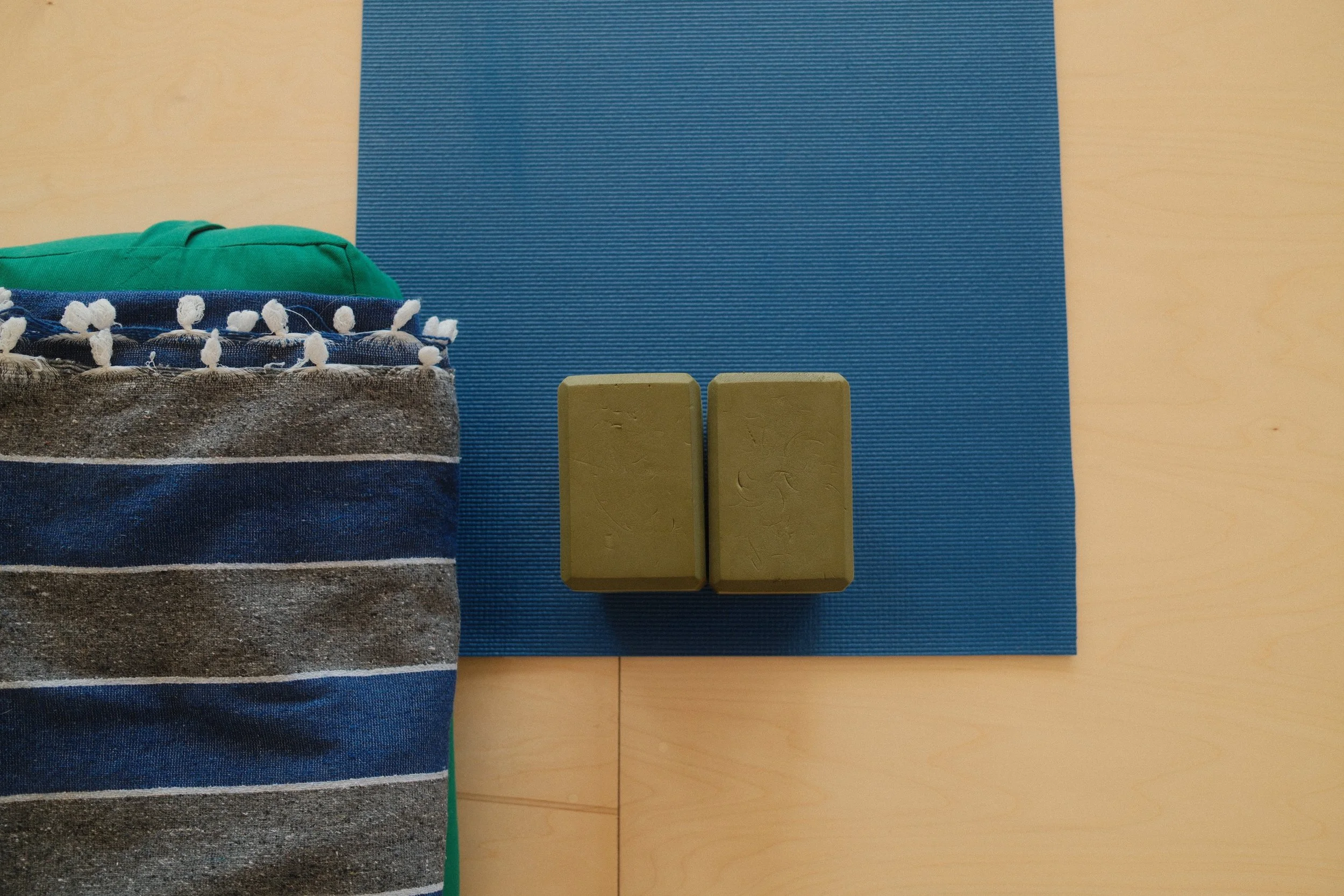
Restorative yoga is a slower style of yoga that focuses on rest, support, and stillness rather than building strength or moving through a series of poses. Instead of flowing from one posture to another, you'll typically settle into a small number of supported positions using props like bolsters, blankets, blocks, and pillows. These props help support your body so you're not constantly working to hold yourself in place.
The goal isn't to stretch as deeply as possible, get stronger, or see how far you can take a pose. It's to create enough space to soften.
You might spend several minutes in one position, allowing your breath to settle and noticing what happens when you're not rushing to the next thing. And yes, that can feel surprisingly challenging at first! We're so used to doing, moving, thinking, planning, and checking things off our lists that being still can feel unfamiliar. Sometimes even uncomfortable.
But that's part of the practice, too. Learning to be with yourself without needing to accomplish something every second.
What about yin yoga & gentle yoga?
Gentle yoga typically incorporates slower movements, accessible stretches, and approachable postures. There's still movement involved, and the practice can help you explore mobility, ease tension, and connect with your breath.
Yin yoga involves holding poses for longer periods, often with an emphasis on the deeper connective tissues around the joints. Depending on the posture, you may experience a more noticeable stretch or sensation in the body.
Restorative yoga focuses on supporting the body so it can rest. Poses are typically held with plenty of props, and the intention is to minimize effort rather than seek a deeper stretch.
None of these styles is better than the others. They're simply different tools for different moments.
Expect yin yoga at all our yoga retreats ;)
Who Is Restorative Yoga For?
More people than you might think. As in literally everyone. If the idea of a fast-paced class makes you feel a little overwhelmed, this might be a beautiful place to start.
Restorative yoga may be especially appealing if you're:
Feeling overwhelmed or mentally exhausted.
When your days are full of decisions, responsibilities, and constant stimulation, having dedicated time without another task to complete can feel incredibly supportive.
Looking for a slower approach to movement.
Not every practice needs to leave you sweaty or sore. Restorative yoga gives you an opportunity to explore your body without making physical intensity the goal.
Navigating a busy season of life.
Whether you're experiencing a major life transition, managing a demanding schedule, or simply feeling like everything is happening at once, creating space for yourself can be valuable.
Curious about yoga but unsure where to begin.
You don't need to know all the poses or understand every Sanskrit word. You can start with a comfortable position, some support, and a willingness to see what you notice.
Learning to listen to your body.
Sometimes we're so focused on what our bodies can do that we forget to ask how they're actually feeling. A slower practice gives you more opportunities to notice sensations, preferences, and boundaries without immediately trying to change them.
Restorative yoga isn't a cure-all, and it won't feel the same for everyone. Stillness can be uncomfortable for some people, especially during periods of stress. You can always adjust your position, open your eyes, move when you need to, or choose a different practice.
Your experience matters more than getting the pose right.
Why Slowing Down Can Feel So Difficult
Here's something I think deserves a little more attention.
We talk a lot about self-care, but how often do we treat it like another item on our to-do list? We schedule the workout, plan the meals, book the massage, and try to squeeze in meditation between meetings. And while those things can absolutely be supportive, it's easy to turn wellness into another way we're measuring whether we're doing enough.
Restorative yoga offers a different perspective. There's no sequence you need to master. No personal record to beat. No expectation that you leave feeling like a completely different person. You're simply making space for yourself.
And if that feels uncomfortable, that's something you can be curious about rather than something you need to fix immediately. You don't have to earn rest by finishing everything on your list first.
Spoiler alert: the list will probably still be there tomorrow.
Sometimes You Need More Than an Hour on Your Yoga Mat
Here's where I think restorative yoga becomes especially interesting.
It's one thing to carve out 20 minutes for yourself at home. It's another thing to step away from your normal routine entirely and give yourself a few days where you can actually slow down. And that's one of the reasons I love hosting yoga retreats.
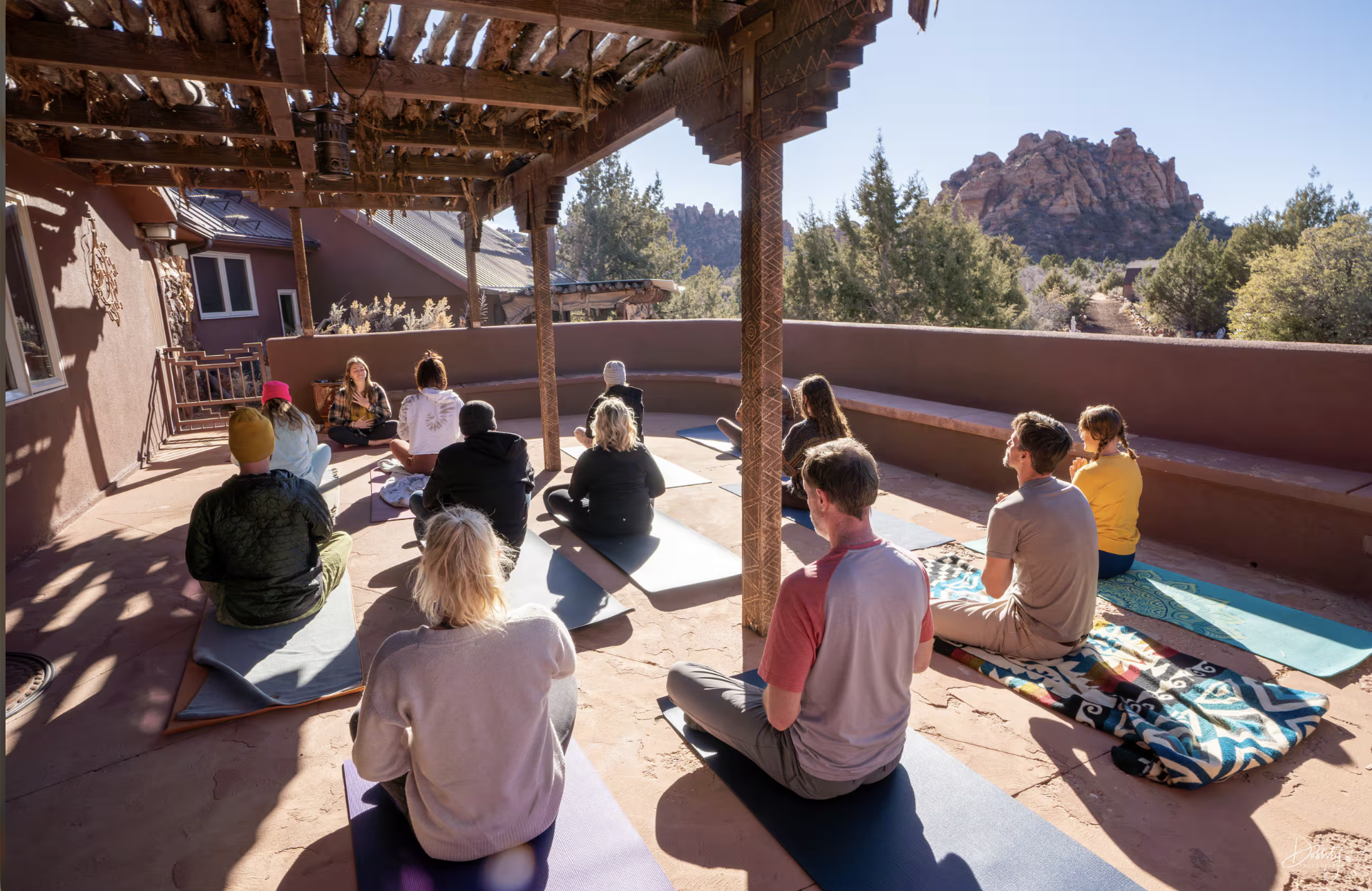
Finding Space To Slow Down In Zion.
This is something I've been thinking about a lot while planning my upcoming retreat in Zion National Park. The red rock formations, the open space, the mountain views, and the opportunity to spend time outside all offer a different backdrop from our usual routines. There will be opportunities for adventure, including an optional hike and horseback riding, but there will also be room to rest and simply enjoy being there.
I don't want a retreat to feel like another packed itinerary where you need a vacation afterward to recover from your vacation. I want there to be room to notice the little things. To enjoy a slow morning. To spend time in conversation without looking at the clock. To move your body and then give yourself permission to rest.
And maybe to discover that you don't have to fill every moment for it to be meaningful.
If you've been craving a little more of that in your life, you can explore my upcoming Zion yoga retreat here.
Restorative Yoga + Your Nervous System
You've probably heard a lot about nervous system regulation lately. It's become quite the wellness buzzword, and for good reason.
But what does it actually have to do with yoga? Your nervous system is constantly responding to information from your environment and your body. Stress, busy schedules, unexpected changes, and everyday responsibilities can all influence how activated or settled you feel. Restorative yoga offers an opportunity to reduce external demands, notice your internal experience, and spend time in supported, quieter positions.
For some people, that can feel calming. Over time, practices that encourage body awareness, gentle breathing, and rest may become useful tools for navigating stressful seasons.

Making Space For Rest In Your Everyday Life
Start small.
Maybe you spend five minutes lying down with your legs supported after a long day. Maybe you take a few intentional breaths before opening your laptop in the morning. Maybe you notice that your body needs a little less stimulation and a little more quiet.
You can also experiment with what rest looks like outside your yoga practice.
Take a walk without listening to anything. Sit outside for a few minutes. Eat a meal without multitasking. Give yourself a little breathing room between commitments instead of scheduling every minute of your day.
The more we create opportunities to check in with ourselves, the more familiar it can become to ask a different question: What do I actually need right now? Not what would make me more productive. Not what I think I should be doing. Just what would feel supportive in this moment.
Ready to Explore Restorative Yoga?
If you're curious about restorative yoga, I encourage you to approach it with an open mind and without too many expectations. You don't need to arrive knowing how to relax. You don't need to clear your mind. And you certainly don't need to be good at yoga. You just need to be willing to explore what happens when you give yourself a little space.
Through my work with private yoga, restorative wellness, mobility, and mindful movement, I love helping people find practices that feel relevant to their actual lives, not just what they think yoga is supposed to look like. Whether you're looking for a more personalized experience or simply exploring a slower approach to movement, there's room to find what works for you.
And remember, your practice doesn't have to look the same every day. Sometimes we build strength by moving. Sometimes we build awareness by slowing down. And sometimes the most valuable thing we can practice is allowing ourselves to rest.
Take what resonates, leave what doesn't, and give yourself a little room to breathe. :)